


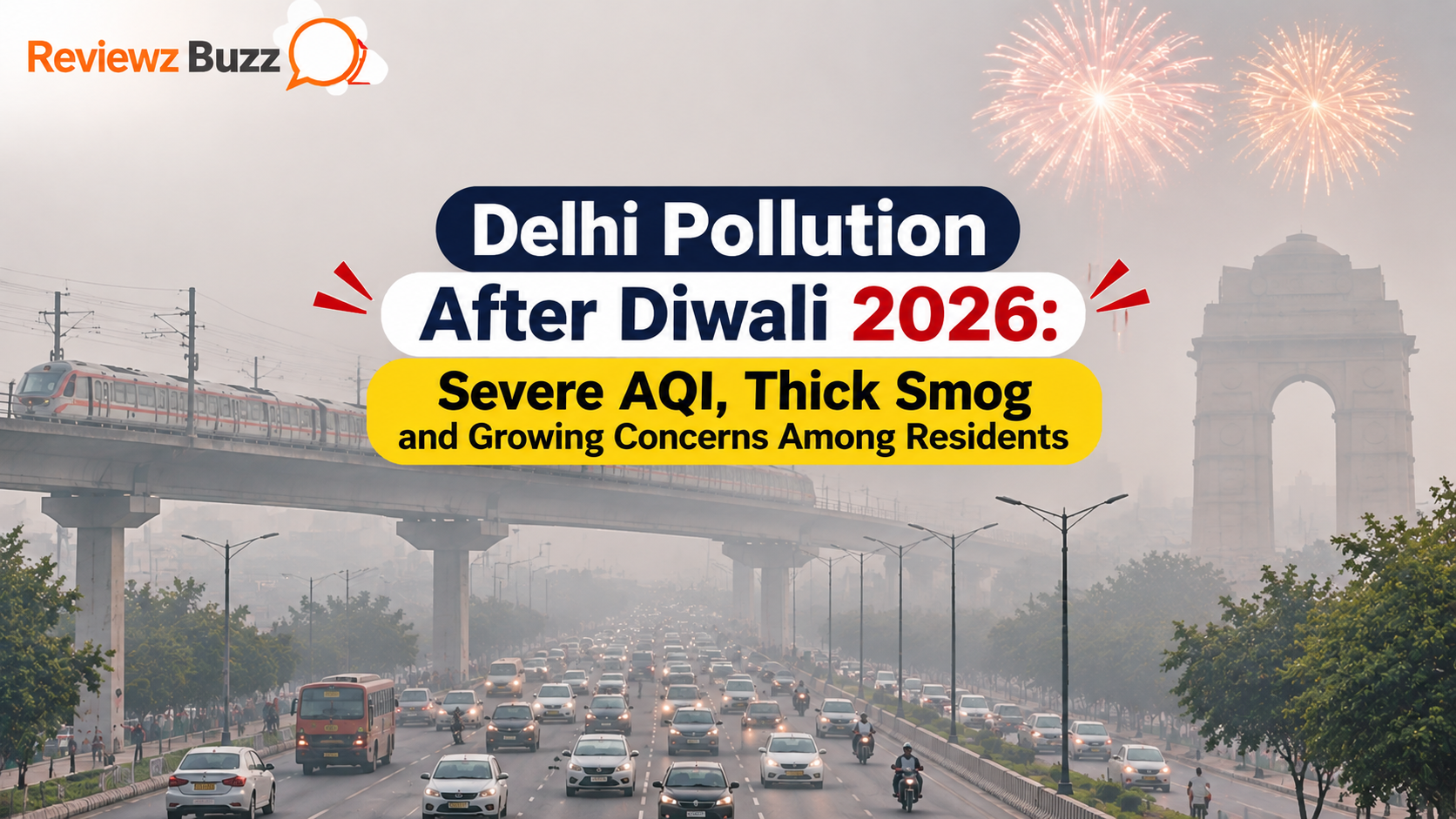
Delhi is once again facing serious air pollution after Diwali celebrations. On November 9, 2026, several parts of the national capital were covered in thick smog, with poor visibility and unhealthy air conditions. The sudden rise in pollution has raised concerns among residents about its impact on public health and the environment.
Despite restrictions on firecrackers, Delhi witnessed deteriorating air quality following Diwali celebrations. The situation has renewed discussions about pollution control measures and the need for long-term solutions to the city’s recurring air pollution problem.
Why Is Delhi’s Air Quality Getting Worse?
Firecracker emissions contributed to the pollution spike after Diwali. The Supreme Court had permitted only certified green firecrackers during limited hours on November 7 and 8, from 6 AM to 7 AM and 8 PM to 10 PM. A complete ban was restored from November 9.
However, firecrackers are not the only reason behind Delhi’s pollution problem. Other major contributors include:
Vehicle emissions: Smoke from cars, buses and trucks adds harmful pollutants to the atmosphere.
Construction dust: Building activities and road dust increase airborne particles.
Industrial emissions: Factories and industrial operations contribute to poor air quality.
Crop burning: Seasonal stubble burning in neighbouring states adds to pollution across Delhi-NCR.
Weather conditions: Low wind speeds and cooler temperatures can trap pollutants close to the ground.
Residents Raise Concerns Over Delhi’s Pollution
Delhi’s worsening air quality has triggered fresh discussions among residents. Several people have expressed concerns about burning eyes, throat irritation, breathing discomfort and reduced visibility.
Public opinion remains divided. While some people believe firecrackers should be avoided during festivals, others argue that authorities must give equal attention to vehicle emissions, industrial pollution and construction dust.
Many residents are questioning why Delhi continues to experience unhealthy air every winter despite repeated restrictions and government measures.
How Can Residents Protect Themselves?
During periods of poor air quality, taking basic precautions can help reduce exposure to pollution.
Check the latest AQI before planning outdoor activities.
Avoid outdoor exercise when pollution levels are severe.
Wear a well-fitted N95 mask when travelling outside.
Keep windows closed when outdoor pollution levels are high.
Give extra attention to children and older people.
Consult a healthcare professional if you experience breathing problems or persistent throat irritation.
Can Delhi Control Its Pollution Problem?
Improving Delhi’s air quality requires more than temporary restrictions during festivals. Long-term action against vehicle emissions, industrial pollution, construction dust and crop burning is equally important.
Authorities have also implemented Stage III measures under the Graded Response Action Plan (GRAP) across Delhi-NCR.
Delhi’s post-Diwali pollution situation highlights the importance of cleaner celebrations, effective government policies and public participation.
What Do You Think?
Should people avoid firecrackers during festivals, or should the government focus equally on vehicles, factories and other major pollution sources?
Share your opinions in the comments. Do you think Delhi can overcome its annual air pollution problem?
Sources-The Indian Express ,Reuters ,Down To Earth